Key Takeaways
- Protect your move from wire and Zelle scams. Learn about moving company deposit laws, federal regulations, and how to verify movers before paying.
No, it is not normal for reputable movers to ask for a cash deposit before moving. Legitimate moving companies operate under strict moving company deposit laws, typically accepting credit cards and limiting deposits to small booking fees. Cash, Zelle, or wire transfers are major red flags indicating potential moving fraud.
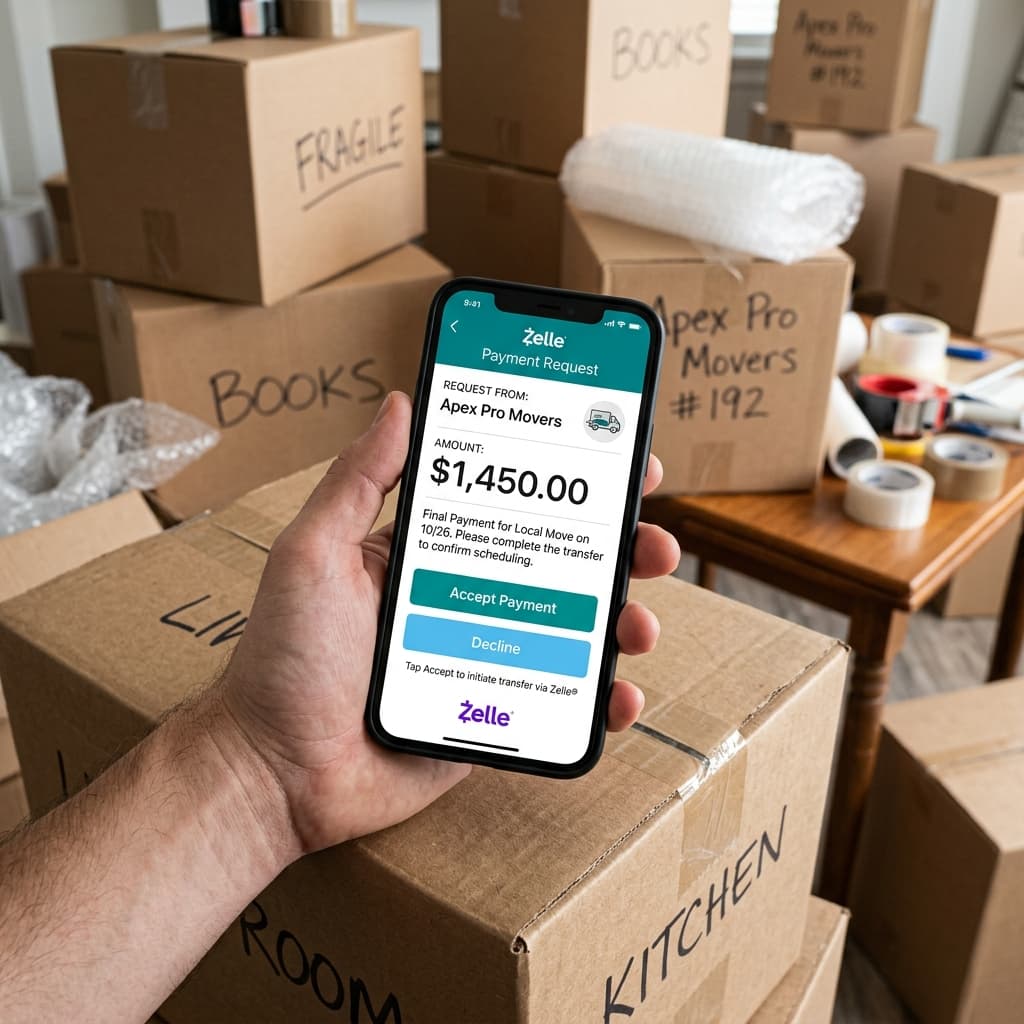
Moving is widely recognized as one of the most stressful life events a person can experience, and this vulnerability is exactly what predatory operators exploit. In recent years, moving fraud has evolved alongside technology, shifting from simple cash demands to sophisticated digital wallet schemes. Unscrupulous movers frequently pressure consumers into using digital peer to peer platforms or direct wire transfers. This tactic is intentionally designed to strip customers of their financial leverage. By understanding how modern digital deposit traps function, consumers can learn to identify the early warning signs of relocation fraud and take proactive steps to safeguard their hard earned money and personal belongings. Relocating families are often overwhelmed, making them prime targets for high pressure digital deposit requests.
The Illusion of Convenience: Why Scammers Demand Cash and Zelle
The primary reason illegitimate operators demand payment via digital platforms like Zelle, Venmo, or cash is the lack of consumer protection. Standard commercial transactions are heavily regulated under the Fair Credit Billing Act, which mandates that credit card issuers investigate fraudulent charges, billing errors, or services that were not rendered. If a moving company fails to show up or holds your goods hostage for ransom, a credit card chargeback offers a reliable mechanism to recover your funds. Conversely, credit card processors maintain strict merchant underwriting guidelines that weed out fraudulent players.
Because rogue companies frequently face chargebacks, credit card processors eventually shut down their merchant accounts. To circumvent this financial policing, scammers rely on instant P2P payments. P2P platforms are built on the legal premise of peer to peer trust, meaning that banks treat authorized digital transfers as cash transactions. Once a customer authorizes a Zelle or wire transfer, the bank cannot reverse it, and the funds are permanently gone. To avoid moving scams of this nature, you must refuse to send direct transfers to any carrier that insists on digital wallet deposits as their sole payment option. These platforms warn in their terms that users should not make commercial purchases with strangers.
What Federal Regulations Say About Upfront Payments
Under federal rules, moving companies must provide transparent estimates, and while they can request a reservation fee, this practice is governed by clear limits. Federal moving company deposit laws state that a booking deposit must be reasonable, usually capped at a modest 10% to 15% of the total estimated cost of the move. Legitimate businesses accept major credit cards for these deposits because they have nothing to hide. These rules ensure that consumers are not forced into high risk agreements where they lose entire deposits simply for seeking to reschedule their relocation dates.
When an operator demands a large upfront payment, they are likely operating in violation of moving company deposit laws. Many of these entities are actually unlicensed household goods brokers who pocket the deposit and contract the job to the lowest bidding carrier. By understanding the boundaries of moving company deposit laws, consumers can recognize that a carrier requiring an immediate 30% or 50% deposit via Zelle is acting outside of standard industry compliance and should be avoided immediately. Rogue brokers use these massive deposits to lock you in, only for a subcontractor to demand more money on moving day.
Checking Credentials: The Movers To Trust Safety Standard
Before you hire any service provider, particularly when searching for a long distance moving company near me, you must conduct a thorough background check. To ensure you are hiring verified moving companies, you should always perform a comprehensive FMCSA safety check. This starts by requesting the company's active USDOT and MC registration numbers. Vetting these credentials is a critical step in verifying that the business is a legitimate motor carrier rather than a scam artist operating out of a residential basement.
Federal regulations mandate that all interstate household goods carriers must be registered with the Federal Motor Carrier Safety Administration (FMCSA). You can verify these credentials directly on the official FMCSA portal. A legitimate carrier must display active operating authority, and more importantly, they must meet the federal cargo liability minimums. This federal standard requires a baseline of $750,000 in cargo insurance to protect consumer goods during transit. If a carrier cannot provide proof of this insurance level, or if their USDOT number is inactive, they are not operating legally. Do not accept excuses; federal law requires this cargo protection. You can [Verify your mover today](https://moverstotrust.com) to ensure they are fully licensed, bonded, and compliant.
Spotting the Red Flags on Moving Day
Rogue movers do not just exploit digital payment systems; they also exhibit physical warning signs. Often, scammers will arrive at your home in unmarked trucks or rental vehicles, lacking any official company decals or USDOT numbers. This is a classic indicator of a secondary scam where the operator intends to load your goods and then demand additional, extorted fees before delivery. Reputable companies invest in clear branding, ensuring their trucks are marked and identifiable.
If you want to understand this tactic fully, read our detailed guide on [spotting unmarked moving trucks scam](/blog/unmarked-moving-trucks-scam) to learn how to identify rogue carriers before they touch a single box. When a company arrives in an unbranded vehicle and demands an immediate cash payment before loading, it is a clear sign that you are dealing with an unauthorized operator.
Protecting Your Assets: A Smart Payment Checklist
To protect your move, you must be assertive about payment methods and regulatory compliance for your upcoming relocation. Reputable moving companies will always provide a written, binding estimate and a signed contract before requesting any form of payment. Under established consumer protection regulations, these documents must clearly state the deposit amount, the terms of the refund policy, and the accepted payment methods.
Never agree to pay via nonreversible platforms, and always keep a paper trail of every interaction. By demanding credit card payment options, verifying USDOT credentials, and ensuring your mover carries the necessary $750,000 cargo insurance, you can protect your belongings and enjoy a completely seamless, secure, and safe relocation experience.
Did you find this guide helpful?
Share it to help others verify credentials and avoid rogue mover scams.
Verified Sources & Citations
In alignment with Google's E-E-A-T and Search Quality guidelines, this article cites the following verified authority sources: