Vetted Local Moving Companies
Verify local hourly movers before booking. Avoid rogue operators, unlicensed truck rentals, and bait-and-switch hourly pricing with our state-by-state licensing index.
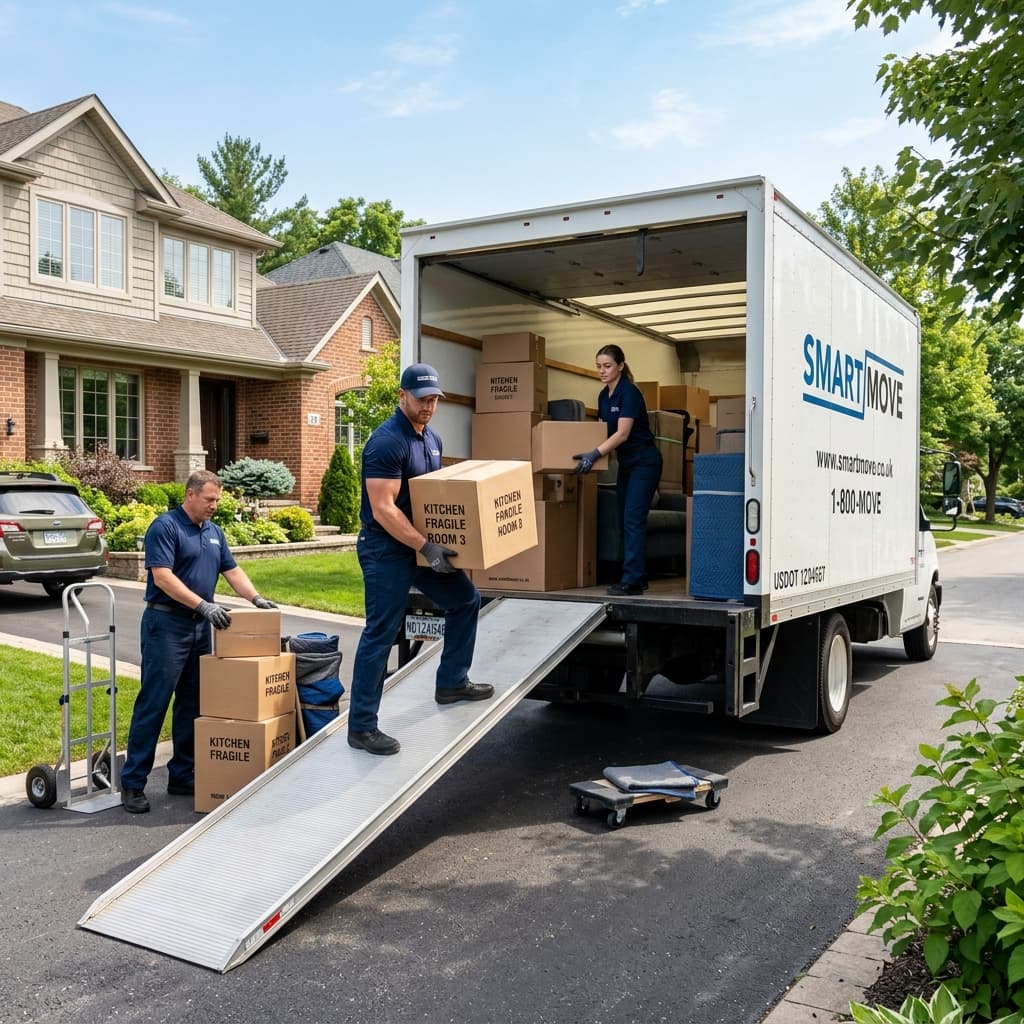
Vetting Local Moving Companies Safely
To find a legitimate local moving company, look for an active business license registered with your state’s utility commission or department of transportation. Unlicensed hourly movers often lack commercial liability insurance, cargo insurance, and worker’s compensation, exposing you to severe financial liability if cargo is damaged or a mover is injured on your property.
Understanding Intrastate vs. Interstate Jurisdictional Boundaries
Before diving into the complexities of hourly rates, it is crucial to understand the regulatory differences governing your relocation. Moving falls into two distinct jurisdictional categories: interstate and intrastate. Interstate moves cross state lines and are heavily regulated by the Federal Motor Carrier Safety Administration (FMCSA). However, a local move—typically defined as a relocation occurring entirely within the borders of a single state (intrastate)—is governed by state-specific agencies.
For instance, in California, the California Public Utilities Commission (CPUC) sets the rules. In Texas, it's the Texas Department of Motor Vehicles (TxDMV); in Florida, the Department of Agriculture and Consumer Services (FDACS); and in New York, the New York State Department of Transportation (NYSDOT). These agencies mandate licensing, insurance requirements, and the maximum tariffs local moving companies can charge. Always verify a mover's local operating authority through our state directory of vetted movers near you to ensure compliance.
Local Moving Hourly Rate Calculation & Crew Sizes
Unlike long-distance moves which are priced primarily by weight or volume and mileage, local relocations are almost exclusively billed on an hourly basis. The total cost of your move will depend heavily on the crew size required to load and unload your belongings efficiently. State tariff laws generally dictate the minimum and maximum rates that moving companies can charge, though these can vary wildly by region and season.
2-Man Crew: Best suited for small apartments (studios or 1-bedrooms) with minimal heavy furniture. A two-man crew typically costs between $100 to $160 per hour. While this is the cheapest hourly rate, it can take significantly longer if you have stairs or a long walk to the truck.
3-Man Crew: The standard for 2- to 3-bedroom homes. With rates ranging from $150 to $220 per hour, a three-man crew is often the most cost-effective option, as two movers handle the heavy lifting while the third carefully packs and organizes the truck, drastically reducing overall labor time.
4-Man Crew (or more): Necessary for large single-family homes (4+ bedrooms), office relocations, or properties with complex access issues. Rates usually start at $200 per hour and go up to $300+. Though the hourly rate is steep, the job is completed in a fraction of the time.
To get a precise estimate based on your home size and local rates, use our comprehensive moving cost estimator.
Double Drive-Time (DDT) Regulations & State Tariff Compliance
One of the most confusing aspects of local moving billing is how travel time is calculated. In states like California, utility commissions enforce what is known as Double Drive-Time (DDT). This law was enacted to protect consumers from being charged for the time a moving crew spends traveling from their dispatch warehouse to the pickup location and from the final drop-off back to the warehouse.
Instead of billing for those unpredictable legs of the journey, moving companies are legally required to double the time it takes to drive from your old home (pickup) to your new home (drop-off). If the drive takes 30 minutes, you are billed for 60 minutes of travel time. This ensures absolute transparency. If you see vague "travel fees" or flat-rate transport surcharges on your estimate, the mover may be violating state tariff regulations. You can check for these irregularities using our Contract Analyzer tool.
Mandatory Valuation Coverage: $0.60/lb vs. Full Value Protection
Your belongings are not automatically fully insured during a local move. By law, moving companies must provide a basic level of liability known as Released Value Protection at no additional cost. However, this only covers your items at a dismal $0.60 per pound per item. Under this valuation, if a mover drops your 50-pound flat-screen TV worth $1,000, you will only receive $30 in compensation.
For adequate peace of mind, you must opt for Full Value Protection (FVP). This tier of coverage requires you to declare the total value of your shipment and pay a premium, but it holds the moving company liable for the repair, replacement, or full cash value of any damaged item. Always review your valuation paperwork before signing.
The Hidden Fee Avoidance Checklist
Rogue operators will often quote a low-ball hourly rate to secure your booking, only to pad the final bill with unexpected accessorial charges on moving day. Protect your budget by looking out for these common hidden fees:
- Stair and Elevator Fees: Some companies charge extra if they have to carry items up flights of stairs or wait for a slow freight elevator. Ensure these are built into the hourly rate.
- Long Carry Fees: If the truck cannot park within a certain distance (usually 50-75 feet) of your front door, movers may charge a long carry fee.
- Exorbitant Packing Material Charges: Unscrupulous movers will use excessive amounts of shrink wrap or packing tape and bill you heavily for it. Ask for an all-inclusive materials rate or supply your own.
- Fuel Surcharges: While legitimate in some cases, excessive fuel fees should be scrutinized. Ensure they comply with state tariff guidelines.
If you suspect a mover is trying to slip in illegal fees, utilize our Scam Risk Checker to audit their reputation and complaint history.
How to Spot Unlicensed Local Truck Rentals & Rogue Operators
The barrier to entry for local moving is unfortunately low. Anyone can rent a box truck and advertise their services on Craigslist or social media marketplaces. These rogue operators operate without state licenses, carry zero workers' compensation or cargo insurance, and often disappear if something goes wrong or someone gets injured on your property.
By understanding the mechanics of local moving rates, enforcing state regulations, and verifying credentials, you can protect yourself from pricing fraud. For more tips on organizing a stress-free relocation, explore our Moving Safety Guides.
Vetted Local Moving Directory
The following local moving companies hold active state permits, satisfactory safety ratings, and verified clean complaint histories.
Retrieving verified carriers...
Frequently Asked Questions
How do I verify a local moving company's license?
Check the table on the right for your state's regulating agency. Visit their website and search for the company by name or permit number. The registry should show their active status, insurance filings, and vehicle count.
Should I pay a deposit for a local move?
Most reputable local moving companies do not require large deposits. If a deposit is required (usually to secure a slot during high-demand weekends), it should be a small, refundable fee paid via credit card. Never pay large cash deposits.
What is valuation coverage?
By law, movers provide free basic valuation coverage of $0.60 per pound per item. For a 10-pound television that breaks, you will only receive $6.00. For valuable items, request Full Value Protection (FVP) or purchase third-party moving insurance.
Top Markets for Local Moving
Find vetted, licensed, and insured local moving professionals in America's largest metropolitan areas.
State Regulatory Authorities
Local moves are governed by state-level commissions. Verify active authority with your local department below:
| State | Regulating Agency |
|---|---|
| California | CPUC (California Public Utilities Commission) |
| Texas | TxDMV (Texas Department of Motor Vehicles) |
| Florida | FDACS (Dept. of Agriculture & Consumer Services) |
| New York | NYSDOT (New York State Dept. of Transportation) |
| Georgia | DPS (Georgia Department of Public Safety) |
| Illinois | ICC (Illinois Commerce Commission) |