Key Takeaways
- Moving across state lines is vastly different from moving within the same state. Learn the crucial differences in consumer protection laws, liability rates, and USDOT requirements.
- Key topic: intrastate vs interstate moving
- Key topic: moving laws
- Key topic: household goods regulations
Hiring a mover requires understanding whether your move is classified as Intrastate (within the same state) or Interstate (crossing state lines). Federal law governed by the Federal Motor Carrier Safety Administration (FMCSA) strictly regulates interstate moving, requiring a USDOT and MC license. Local moves within a single state are governed entirely by state-level transportation boards or utilities commissions, which carry different consumer rights, liability limits, and dispute processes.
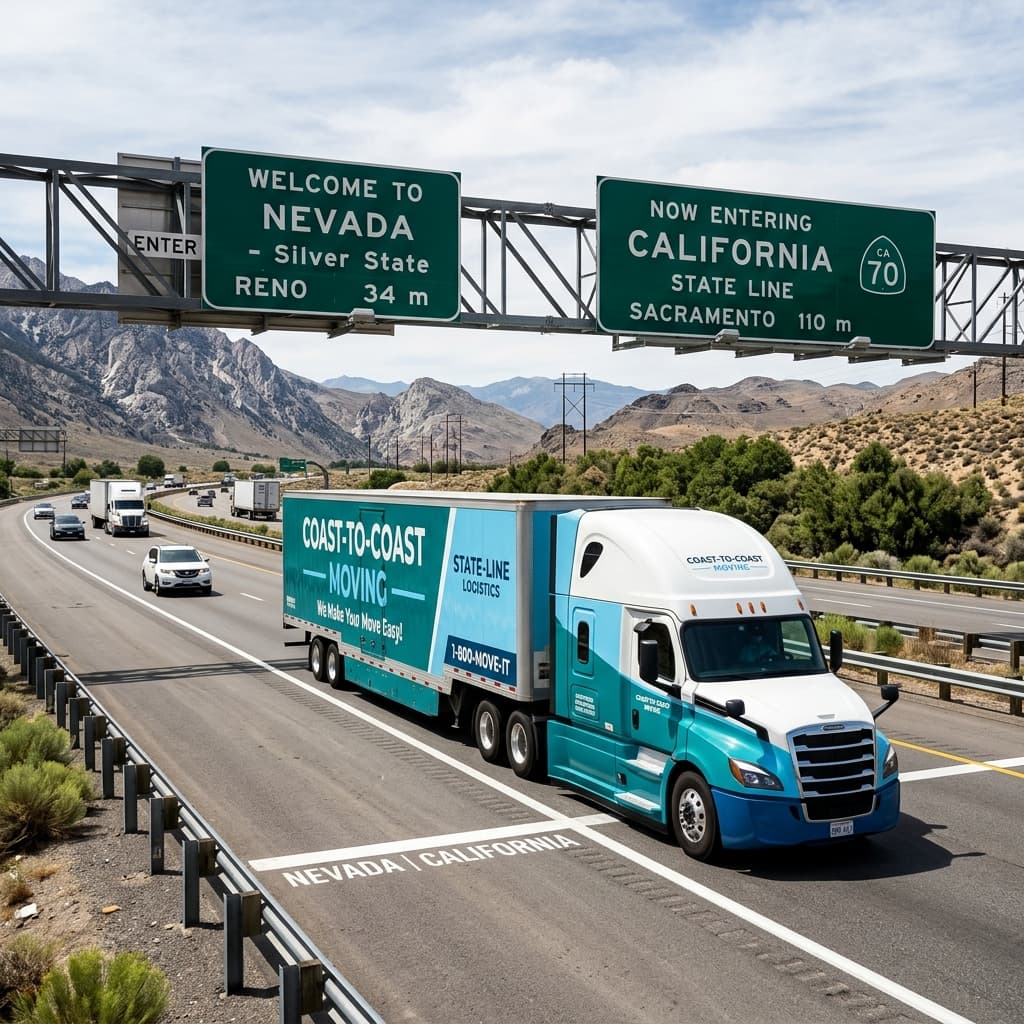
When you hire a moving company, it is easy to assume the same laws protect you regardless of distance. However, in the eyes of transportation regulators, crossing a state boundary—even by a single mile in a bordering metropolitan area like New York/New Jersey, Philadelphia/Delaware, or DC/Maryland/Virginia—instantly changes the legal jurisdiction of your entire shipment. Failing to recognize which rules apply to your move can leave you without legal protection in a billing dispute or carrier claim.
Whether you are coordinating a standard local move within your neighborhood, arranging a specialized senior relocation for an elderly family member, or booking a cross-country interstate move, understanding the regulatory framework of your relocation route is crucial for your protection.
1. Interstate Moving (Federal Law)
If your shipment crosses state lines at any point during transit, your move is classified as interstate. This is true even if the physical distance is extremely short (for example, moving from Manhattan, NY to Jersey City, NJ).
- Governing Body: The Federal Motor Carrier Safety Administration (FMCSA), a federal division of the U.S. Department of Transportation.
- Licensing Requirements: The moving company must possess an active USDOT number and an MC (Motor Carrier) number granting Household Goods (HHG) operating authority. They must also maintain active liability and cargo insurance policies on file with the federal government.
- Valuation Rate: By default, federal law dictates that movers are only liable for 60 cents per pound per article for damaged goods (Released Value Protection) unless you pay for Full Value Protection. This means if a 100-pound television worth $1,000 is destroyed, the carrier is only legally obligated to compensate you $60.
- Consumer Rights Booklet: Under federal law, your mover is legally required to provide you with the official FMCSA publication *"Your Rights and Responsibilities When You Move"* before loading your shipment.
- Arbitration Requirements: Federal guidelines require all licensed interstate carriers to offer a formal, neutral arbitration program to resolve consumer disputes regarding loss, damage, or billing discrepancies.
2. Intrastate Moving (State Law)
If your shipment starts and ends within the borders of a single state and does not cross any state lines, it is classified as intrastate.
- Governing Body: State-specific agencies regulate local movers. For example, the Texas Department of Motor Vehicles (TxDMV) in Texas, the California Public Utilities Commission (CPUC) in California, or the Department of Agriculture and Consumer Services (FDACS) in Florida.
- Licensing Requirements: Many states do not require a federal USDOT number for intrastate moves. Instead, carriers must obtain a state-level permit or operating authority. Some states have virtually no licensing requirements, leaving consumers with limited regulatory backup.
- Valuation Rate: Valuation rates for local moves vary by state. For example, California sets the default released liability at 60 cents per pound, while other states may have different standard liability rates or require mandatory insurance offerings.
- Dispute Resolution: In an intrastate dispute, the FMCSA has no jurisdiction. If a mover holds your goods hostage during a local move in Texas, you must contact the TxDMV or local law enforcement rather than filing a federal complaint.
Key Takeaways for Consumers
Before signing a moving contract, verify the geography of your route and check these essential safety benchmarks:
- Cross-Border Route Warning: If you live near a state line and your mover drives through a neighboring state to reach your new home (even if both houses are in the same state), some courts have ruled that the move constitutes interstate commerce.
- Registry Checks: Use the search tool on the Movers To Trust homepage to look up your carrier's USDOT number. If they are handling an interstate moving project, ensure their status lists active "Household Goods" authority. If they are handling a local move, confirm their registration status with your state's utility commission.
- Audit the Carrier: Run the company through our [Scam Checker Tool](/scam-checker) to verify their historical complaint metrics and safety ratings before signing any contract.
- Verify Insurance Policies: Ensure that the mover has active cargo and liability policies on file. You can read our guide on [Vetting Methodology](/vetting-methodology) to understand how we check insurance limits and safety reviews.
Related Consumer Protection Resources & Tools
To ensure your relocation is secure and fully compliant with federal and state regulations, explore our consumer advocacy resources:
- Verify Operating Authority: Audit carrier credentials with our [Consumer Scam Risk Checker](/scam-checker).
- Explore Service Standards: Learn more about our vetted [Vetted Long-Distance Moving Services](/services/long-distance).
- Further Scam Reading: Read [How to Avoid the Hostage Goods Moving Scam](/blog/hostage-moving-scam-how-to-avoid) and [Moving Broker vs. Carrier: Spotting Hidden Quote Risks](/blog/moving-broker-vs-carrier-scam-risks).
- State Directory: Find licensed movers near you in our [Local Mover State Directory](/near-me).
Did you find this guide helpful?
Share it to help others verify credentials and avoid rogue mover scams.
Verified Sources & Citations
In alignment with Google's E-E-A-T and Search Quality guidelines, this article cites the following verified authority sources: