Key Takeaways
- Personally Procured Moves (PPM/DITY) offer military families flexibility, but they are prime targets for rogue mover weight ticket fraud. Learn how to protect your relocation payout.
- Key topic: military pcs moving
- Key topic: dity move weight tickets
- Key topic: ppm move scams
Military families opting for a Personally Procured Move (PPM), formerly known as a DITY move, are primary targets for rogue movers who execute weight ticket fraud. Because military relocation payouts are calculated directly from certified scale tickets showing the truck's empty and loaded weights, scammers inflate these tickets to overcharge families, resulting in denied federal reimbursements. Inspecting scale certificates and cross-referencing truck capacities is crucial to protect your military payout.
A Permanent Change of Station (PCS) is a stressful time for service members. To gain control over their schedule and maximize potential relocation payouts, many choose a PPM (Do-It-Yourself) move. Under this program, the government reimburses the service member up to 100% of the cost it would have paid to hire a contractor, allowing families to keep any remaining profit. However, this profit potential makes DITY moves a goldmine for deceptive moving companies.
Whether you are coordinating a military moving project across the country, arranging long-distance transportation for your household goods, or requiring professional packing services to secure your belongings during transit, avoiding PPM fraud is critical to safeguarding your pocketbook.
Understanding Weight Ticket Fraud
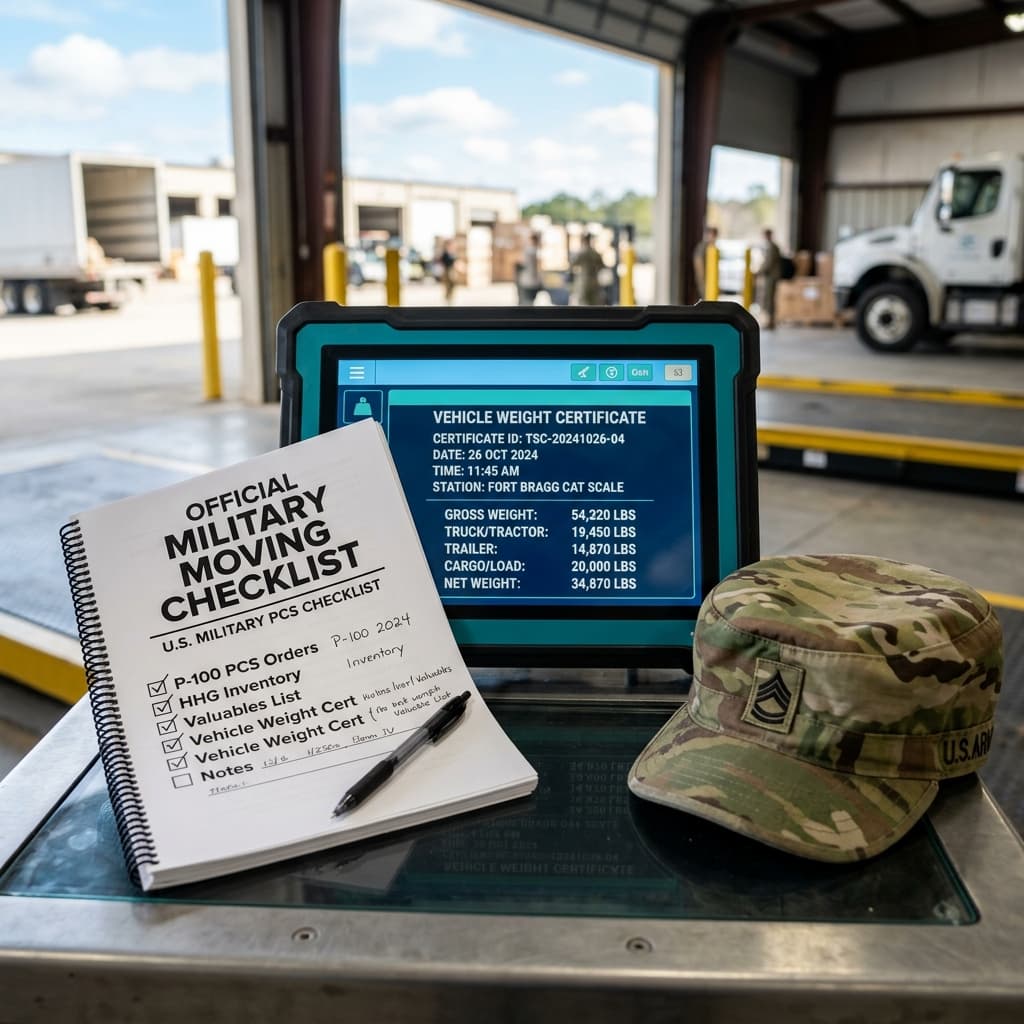
To secure your government reimbursement, you must submit two official weight tickets from a certified public scale (like a CAT scale):
- Empty Weight Ticket: The weight of the moving truck with a full tank of fuel but no cargo or passengers.
- Loaded Weight Ticket: The weight of the same truck after your household goods have been loaded.
The difference between these two numbers is the weight of your household goods, which determines your reimbursement rate.
The Fraud: Rogue movers inflate the loaded weight ticket using several techniques: * The "Tire Stuffer": Placing heavy items (like concrete blocks, sandbags, or iron weights) in the truck or cabin before weighing, then removing them before delivery. * The Fuel Level Manipulator: Weighing the truck empty with a near-empty fuel tank, then weighing it loaded with a full tank and an extra passenger inside. * The Forged Ticket: Creating completely fake scale certificates using counterfeit software or blank templates.
The Consequences for Military Families
If the government's transportation office flags a weight ticket as suspicious (for example, if the cargo weight exceeds the physical load limit of the truck size listed on the rental agreement), they will audit the claim.
- Reimbursement Denial: The military may deny your entire payout, leaving you to pay the scam moving company out of pocket.
- Criminal Charges: Because you signed the travel voucher certifying the weights, you can be held legally responsible for submitting fraudulent documents to the federal government, potentially risking your military career.
How to Protect Your PCS Payout
If you choose a dity move / ppm move and hire a commercial carrier, implement these safety measures:
- Accompany the Truck to the Scale: Whenever possible, drive your personal vehicle to the local certified scale and watch the truck get weighed. Ensure the fuel levels are consistent and that no extra personnel are standing on the scale during the process.
- Verify Certified Tickets: Look closely at the scale tickets. Genuine tickets from national scale brands contain unique serial numbers, automated timestamps, and security watermarks.
- Get an Estimate Comparison: Before you finalize your relocation budget, use our [Moving Cost Estimator](/estimator) to get standard weight-to-cost projections to see if your mover's weight estimates align with industry norms.
- Cross-Reference in the Registry: Do not hire any carrier from social media ads or classified boards. Check their safety logs on our [Carrier Search Portal](/search) to verify active operating authority and inspect historical complaint patterns.
Related Consumer Protection Resources & Tools
To ensure your relocation is secure and fully compliant with federal and state regulations, explore our consumer advocacy resources:
- Verify Operating Authority: Audit carrier credentials with our [PPM / DITY Cost Estimator](/estimator).
- Explore Service Standards: Learn more about our vetted [Military PCS Relocation Services](/services/military-moving).
- Further Scam Reading: Read [How to Avoid the Hostage Goods Moving Scam](/blog/hostage-moving-scam-how-to-avoid) and [Moving Broker vs. Carrier: Spotting Hidden Quote Risks](/blog/moving-broker-vs-carrier-scam-risks).
- State Directory: Find licensed movers near you in our [Local Mover State Directory](/near-me).
Did you find this guide helpful?
Share it to help others verify credentials and avoid rogue mover scams.
Verified Sources & Citations
In alignment with Google's E-E-A-T and Search Quality guidelines, this article cites the following verified authority sources: