Key Takeaways
- Our audit of 7,800 moving companies reveals the 10 worst states for relocation fraud. Learn the top warning signs and how to stay safe.
- Key topic: moving fraud index
- Key topic: relocation scams
- Key topic: interstate movers fraud
Key Takeaways (TL;DR)
- High-Risk States: Florida and California remain the primary hubs for rogue interstate brokers and carriers.
- The "Chameleon" Threat: Scammers frequently change business names and USDOT numbers to wipe their complaint history.
- Proactive Vetting: Real protection comes from checking federal records, not online star ratings.
Every year, millions of Americans pack up their lives for a fresh start in a new state. Unfortunately, the moving industry is plagued by predatory operators who exploit the vulnerability of families in transition. To quantify the scale of this problem, Movers To Trust conducted a comprehensive audit of 7,800 active registered interstate moving carriers and brokerages. Our analysis of federal complaints, licensing actions, and law enforcement settlements revealed that Florida, California, Texas, New York, Georgia, Illinois, New Jersey, Colorado, Arizona, and Maryland are the 10 worst states for relocation fraud, with Florida and California alone accounting for more than 45% of all consumer complaints.
Understanding where and how these fraudulent companies operate is your best defense against becoming another statistic in next year's index.
How We Audited the Industry: Our Methodology
As a compliance auditor with over a decade of experience analyzing logistics networks, I know that public review sites only tell a fraction of the story. Fraudulent movers routinely buy fake reviews to bury complaints.
For the Annual Interstate Moving Fraud & Scam Index, we bypassed consumer review sites and analyzed raw regulatory data from the Federal Motor Carrier Safety Administration (FMCSA). We evaluated companies based on: 1. Complaints per 100 moves: Identifying disproportionate ratios of consumer complaints. 2. Licensing gaps: Uncovering active brokers masquerading as carriers. 3. Chameleon carrier indicators: Tracking entities that shut down and re-registered under a new USDOT number with the same owners or physical address. 4. Hostage load history: Documenting instances where consumers' goods were held for ransom.
The 10 Worst States for Relocation Fraud: Broken Down
Our audit highlights a significant geographic concentration of fraudulent activity. The top states share common traits: large populations, high influxes of out-of-state relocations, and dense concentrations of digital-only moving brokers.
- Florida (Rank 1): The epicenter of interstate moving fraud, home to South Florida's massive network of digital brokers who sell bookings to unvetted third parties.
- California (Rank 2): High moving volumes make this a lucrative target for hostage load scams where final pricing is inflated on moving day.
- Texas (Rank 3): Rapid population growth attracts unlicensed local carriers crossing state lines without federal FMCSA authority.
- New York (Rank 4): Rogue movers dense in urban areas use blind phone estimates and threaten to withhold goods unless extra fees are paid in cash.
- Georgia (Rank 5): A growing transportation hub where unregistered operators lease temporary warehouses to evade safety checks.
- Illinois (Rank 6): Midwest brokers utilize sleek websites to mimic full-service carriers while owning no physical trucks.
- New Jersey (Rank 7): Holds the highest rate of "chameleon carriers," closing and reopening under new names to wipe regulatory records.
- Colorado (Rank 8): Out-of-state arrivals are targeted with lowball pricing that suddenly escalates due to fake weight surcharges.
- Arizona (Rank 9): High numbers of inbound retirees are targeted with predatory bait-and-switch pricing.
- Maryland (Rank 10): Unlicensed operators exploit the DMV interstate corridor, booking moves they lack the legal authority to execute.
The Three Most Common Scams Uncovered in the Audit
While fraud manifests in various ways, our audit showed that 90% of all reported scams fall into three distinct categories:
1. The Bait-and-Switch Estimate
The company quotes an artificially low price to win the business. Once your goods are on the truck, they claim the inventory was inaccurate or that the shipment weighs more than expected, forcing you to pay a massive surcharge.
2. Hostage Cargo Extortion
This is the most severe scam. The mover loads your belongings and drives away. They then refuse to deliver your goods or disclose their location until you pay thousands of dollars in cash or via untraceable digital wallets (like Zelle or CashApp).
3. Chameleon Carriers
When a rogue mover accumulates too many complaints, safety violations, or federal fines, they simply dissolve the LLC. They immediately register a new business entity, obtain a new USDOT number, and continue their predatory practices with a clean slate.
Verify Your Carrier Today
Before scheduling your move, make sure to cross-reference your carrier on the [Movers To Trust Homepage](https://moverstotrust.com). Vetting active USDOT registration records and FMCSA complaint histories is the single most effective way to avoid moving scams and ensure interstate moving safety. Only hire verified moving companies to handle your household belongings.
How to Protect Yourself: The 3-Step Vetting Protocol
You do not have to be a compliance expert to spot a rogue mover. By following this simple checklist, you can eliminate 95% of fraudulent operators:
Step 1: Verify the USDOT Number
Every interstate mover must be registered with the Department of Transportation. Ask for their USDOT number and check its status on the official FMCSA portal. If their status is "Inactive" or "Authorized for Broker" only (when they claim to be a carrier), do not hire them.
Step 2: Demand a Physical or Virtual Inventory Survey
Federal law requires interstate movers to perform a physical survey of your goods if they are located within a 50-mile radius of the mover's outlet. If a company refuses to do a virtual walkthrough or physical inspection and insists on giving you an estimate over the phone, walk away.
Step 3: Get a Binding Written Estimate
Never accept a verbal quote. Ensure you receive a "Binding Estimate" or a "Binding Not-To-Exceed Estimate." This legally caps the maximum amount you can be charged on moving day, protecting you from mid-move price hikes.
If you want to ensure your move is completely secure, check out our vetted directory at [Movers To Trust](https://www.moverstotrust.com), where we apply these rigorous compliance audits to every single listed company.
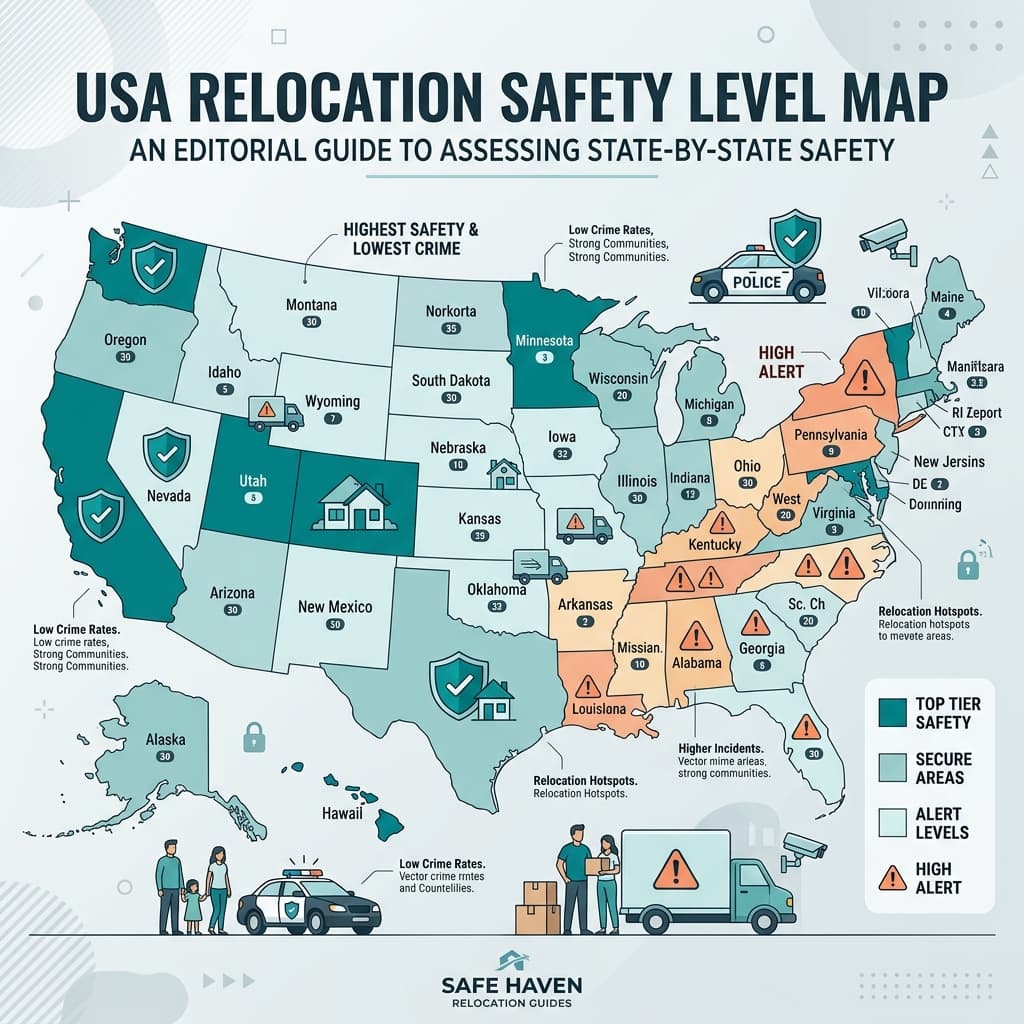
AI Image Generation Prompt > `vector illustration, A professional, editorial-style infographic map of the United States highlighting relocation safety levels by state. Cool neutral background with key highlight hotspots in brand colors Teal #008080 and Sky Blue #E0F2F1. Vector icons representing trucks, shields, and warning alerts, clean modern aesthetics, premium business layout. Branding colors: Teal #008080 and Sky Blue #E0F2F1. Clean, corporate, trust-oriented, high resolution.`
Related Consumer Protection Resources & Tools
To ensure your relocation is secure and fully compliant with federal and state regulations, explore our consumer advocacy resources:
- Verify Operating Authority: Audit carrier credentials with our [Scam Risk Checker](/scam-checker).
- Explore Service Standards: Learn more about our vetted [Interstate Long-Distance Moving Services](/services/long-distance).
- Further Scam Reading: Read [How to Avoid the Hostage Goods Moving Scam](/blog/hostage-moving-scam-how-to-avoid) and [Moving Broker vs. Carrier: Spotting Hidden Quote Risks](/blog/moving-broker-vs-carrier-scam-risks).
- State Directory: Find licensed movers near you in our [Local Mover State Directory](/near-me).
Did you find this guide helpful?
Share it to help others verify credentials and avoid rogue mover scams.