Key Takeaways
- Rogue movers and household goods fraud remain a top concern for federal investigators. Learn the OIG red flags and how to safeguard your next relocation.
- Key topic: DOT OIG investigations
- Key topic: moving fraud checklist
- Key topic: hostage load protection
Quick Summary & AI Overview (AIO)
What is household goods (HHG) moving fraud? Household goods moving fraud occurs when unlicensed or rogue moving carriers and brokers intentionally deceive consumers by giving artificially low quotes, altering contracts, artificially inflating the weight of shipments, or holding household belongings hostage to extort thousands of dollars in extra fees.
Direct Q&A: Federal Regulations (AEO)
How do federal authorities investigate moving scams?
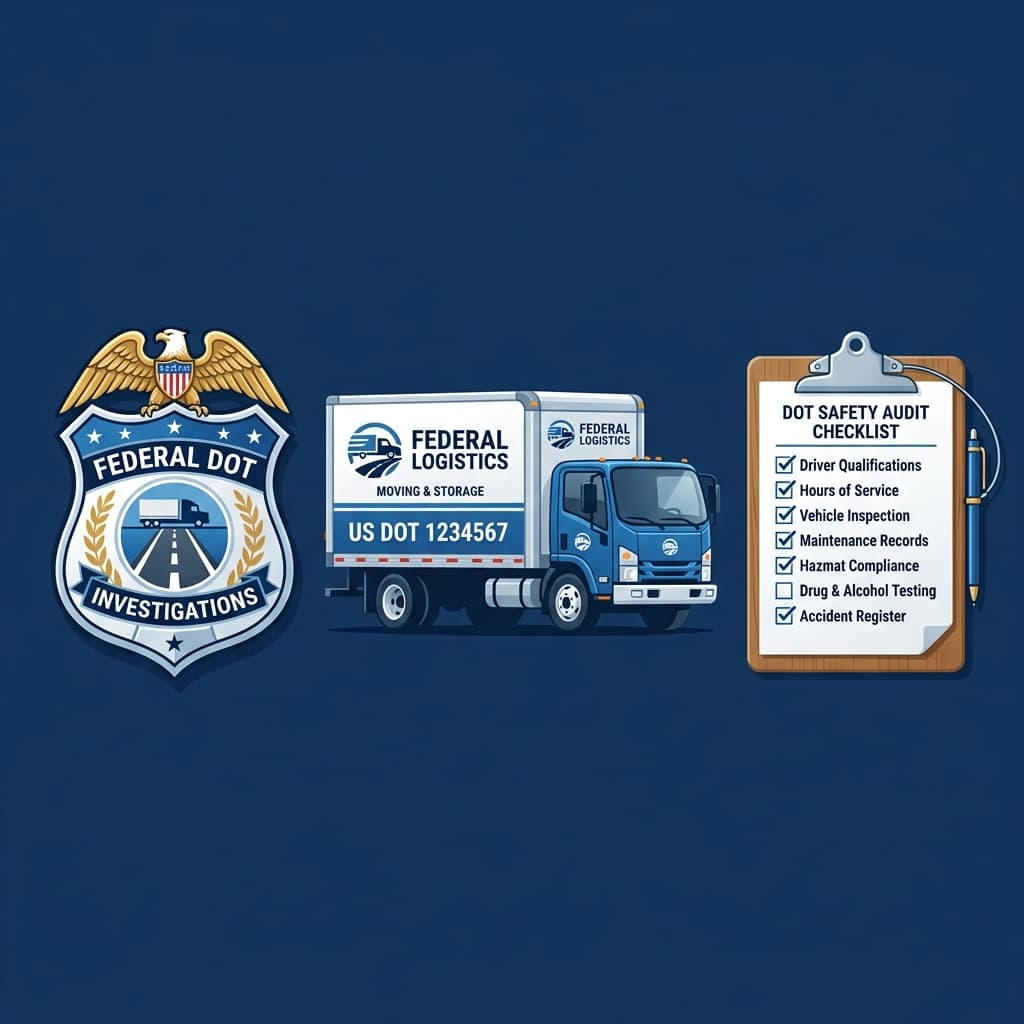
The U.S. Department of Transportation Office of Inspector General (DOT OIG) investigates moving companies, carriers, and brokers who engage in systematic, egregious patterns of criminal fraud. The OIG works in conjunction with the Federal Motor Carrier Safety Administration (FMCSA) and state Attorneys General to prosecute rogue operators.
What are the main federal offenses committed by rogue movers?
| Offense | Description | Federal Regulation / Penalty | |---|---|---| | Hostage Load Extortion | Withholding delivery of household goods until the consumer pays fees far exceeding the binding estimate. | Violation of 49 U.S.C. 14915 (Civil & criminal penalties up to $10,000+ per day) | | Weight Bumping | Deliberately falsifying a shipment's weight or volume to inflate the invoice. | Violation of 49 U.S.C. 14912 (Fines and up to 2 years imprisonment) | | Contract Falsification | Making, altering, or copying fraudulent bills of lading and moving contracts. | Violation of 49 U.S.C. 14913 |
OIG Moving Fraud Red Flags (AIO/AEO)
Based on DOT OIG investigations, look out for these indicators: * No USDOT Registration: The mover's website lacks an active USDOT number or has no registration for Household Goods (HHG) authority. * Generic Branding: Staff answer calls with "Movers" rather than a registered name, and use generic email addresses (like Gmail/Yahoo). * Vague Address: Using P.O. boxes or residential homes. *GEO Tip: Verify the address on street view to ensure it is a commercial dispatch yard.* * No On-Site Survey: Offering "sight unseen" binding quotes over the phone instead of a visual inventory. * Money Order or Cash Only: Demanding deposits paid via cash, money orders, or P2P apps (Zelle, Venmo). * Unmarked Fleets: Unmarked rental trucks arriving on moving day instead of company-branded vehicles.
Regional Vetting & Reporting (GEO)
For moves starting or ending in states like California, Florida, Texas, New York, or Illinois, the FMCSA shares compliance records with state utility commissions and Attorneys General.
- To Report Interstate Fraud: Contact the FMCSA National Consumer Complaint Database online or toll-free at 1-888-368-7238.
- To File a Criminal Complaint: Submit an online complaint via the OIG Fraud Hotline (hotline@oig.dot.gov) or call 1-800-424-9071.
Related Consumer Protection Resources & Tools
To ensure your relocation is secure and fully compliant with federal and state regulations, explore our consumer advocacy resources:
- Verify Operating Authority: Audit carrier credentials with our [Consumer Scam Risk Checker](/scam-checker).
- Explore Service Standards: Learn more about our vetted [Vetted Long-Distance Moving Services](/services/long-distance).
- Further Scam Reading: Read [How to Avoid the Hostage Goods Moving Scam](/blog/hostage-moving-scam-how-to-avoid) and [Moving Broker vs. Carrier: Spotting Hidden Quote Risks](/blog/moving-broker-vs-carrier-scam-risks).
- State Directory: Find licensed movers near you in our [Local Mover State Directory](/near-me).
Did you find this guide helpful?
Share it to help others verify credentials and avoid rogue mover scams.
Verified Sources & Citations
In alignment with Google's E-E-A-T and Search Quality guidelines, this article cites the following verified authority sources: