Key Takeaways
- Learn how to move a piano long distance and transport fine art or heavy safes safely. Discover white-glove credentials, USDOT checks, and insurance requirements.
- Key topic: how to move a piano long distance
- Key topic: high-value moving
- Key topic: moving antiques and art
To safely hire movers for a grand piano or artwork, verify their USDOT status and check for specialized handling experience. Choose movers with climate-controlled fleets and custom-crating capabilities. Ensure they hold active operating authority and adequate cargo liability insurance rather than standard carrier coverage to protect your high-value specialty items.
Introduction: The Risks of Specialty Relocation
Relocating standard household items is challenging enough, but transporting high-value, heavy, or delicate items requires an entirely different level of precision, expertise, and regulatory oversight. Whether you are moving a multi-thousand-dollar oil painting, an heirloom grand piano, or a fireproof security safe, treating these objects like standard furniture is a recipe for physical damage and financial loss. When these items cross state lines, they fall under interstate transport regulations governed by the Federal Motor Carrier Safety Administration (FMCSA). Understanding the technical requirements of specialty moving is essential to safeguarding your assets and ensuring your selected movers are legally compliant.
For high-value moves, you cannot simply hire the first company you find online. To protect your investment, you should only hire verified moving companies that have established track records in specialized logistics. Standard moving companies often lack the specialized equipment, custom packing materials, and technical training required to handle heavy or fragile items. By taking the time to verify credentials, you can avoid moving scams and ensure your irreplaceable items arrive at their destination without a scratch.
Pianos: The Art of Precision Logistics
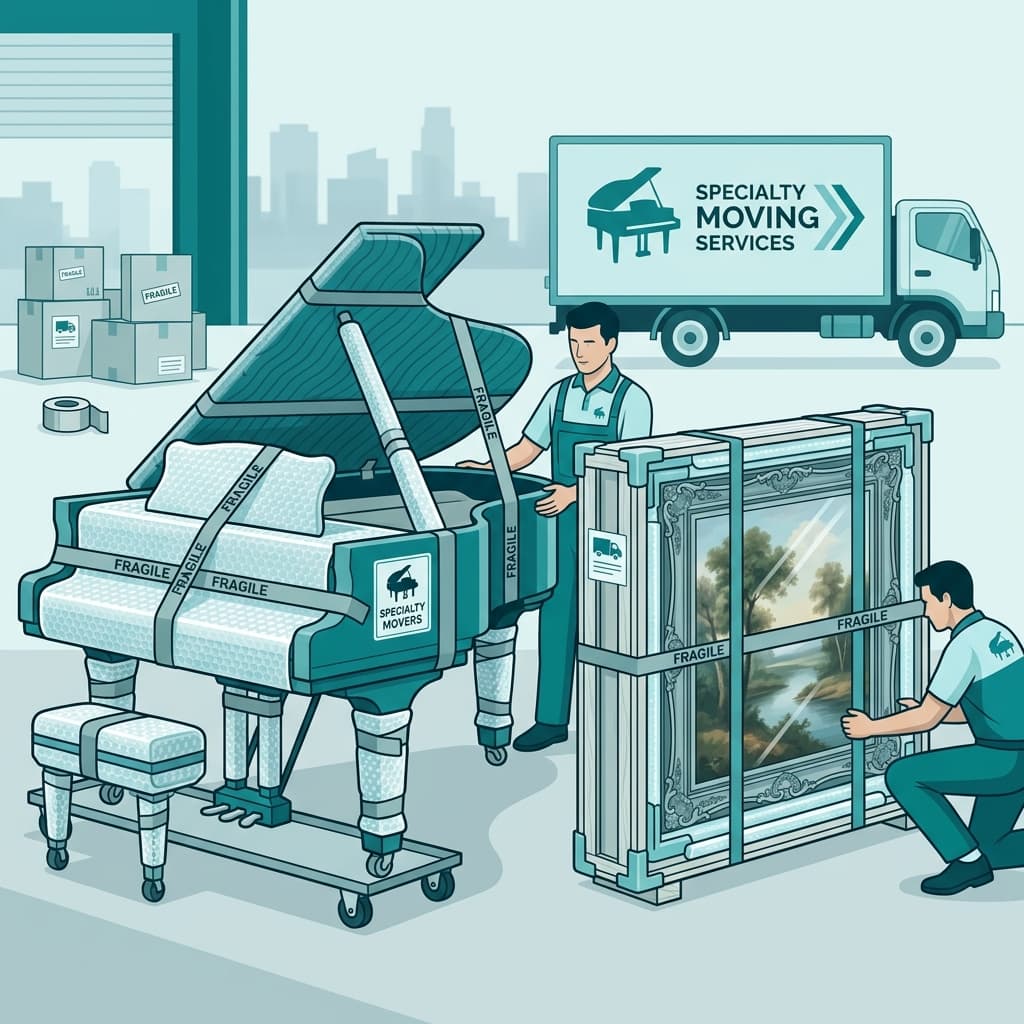
Pianos are not just heavy pieces of furniture; they are complex, delicate musical instruments containing thousands of moving parts under high tension. When you are planning how to move a piano long distance, a generic moving service relying on standard dollies and thin moving blankets is completely insufficient. Grand and upright pianos require partial disassembly, secure mounting to a specialized piano board (also known as a skid board), and extensive layers of padding.
To move a grand piano safely, the lyre, legs, and lid must be carefully removed and wrapped in custom-fitted moving blankets. The main body of the piano is then tilted and secured onto the skid board using heavy-duty ratcheting straps. This board acts as a rigid, flat foundation that absorbs vibrations and shock during transit, preventing the piano's frame from twisting or warping.
Furthermore, climate control is a non-negotiable requirement for piano transport. Changing temperatures and humidity levels can warp the sounding board, crack the pinblock, and detune the strings. Legitimate specialty carriers utilize climate-controlled vans equipped with air-ride suspension systems, which minimize road vibrations that can cause structural issues. When you look for a long distance moving company near me to handle such a delicate instrument, always ask about their climate control capabilities and air-ride suspension.
Fine Art and Antiques: White-Glove Solutions
Fine art, oil paintings, sculptures, and historical antiques require museum-grade preservation techniques. Unlike standard goods, these items cannot be simply loaded into a moving truck. The industry standard for high-value artwork is custom wooden crating. This involves constructing a sturdy wooden box tailored specifically to the dimensions of each piece of art.
Inside the crate, the artwork is wrapped in acid-free glassine paper, which protects the delicate surface paint without trapping moisture. This is followed by layers of shock-absorbing foam inserts that hold the item completely static. Using standard bubble wrap directly on an oil painting can damage the paint, so hiring professionals who understand these conservation-grade materials is critical. Additionally, temperature-stable transport is necessary to prevent thermal expansion and contraction, which can cause paint to crack or canvas to sag.
Heavy Safes: Rigging and Floor Loading
Security safes present a different challenge: concentrated, extreme weight. A typical gun safe or fireproof document safe can weigh anywhere from 500 to over 1,500 pounds. Moving such an item requires heavy-duty rigging equipment, including steel-reinforced dollies, hydraulic lifts, stair-climbing machines, and thick Masonite floor runners to distribute the weight and protect your home’s flooring from cracking.
Before attempting to move a safe, professional movers perform a comprehensive structural assessment of the hallways, stairs, and flooring along the route. They calculate the load capacity of wood and concrete subfloors to prevent structural collapse. Once inside the truck, the safe must be anchored using heavy-duty straps rated for high-tonnage tension to ensure it remains stationary. If a safe shifts during a sudden stop, it can cause catastrophic damage to the vehicle and other cargo.
The Movers To Trust Advocacy Standard: Verifying Credentials
To ensure absolute safety when relocating high-value goods, consumer protection must be your top priority. Under the Movers To Trust Advocacy Standard, we educate consumers on how to verify a carrier's legal operating status before booking. You should never hire a moving company based solely on an online quote or a polished website.
Instead, perform an FMCSA safety check by visiting the official federal database. You must request the carrier’s USDOT and MC (Motor Carrier) license numbers and input them into the FMCSA portal. This portal allows you to verify if the company possesses active operating authority, a clean safety record, and appropriate insurance. For specialized transport of heavy or high-value items, check that the carrier meets the federal cargo liability minimum ($750,000 baseline) to cover potential losses. If a company is unregistered, has pending insurance cancellations, or refuses to provide their USDOT number, they should be avoided immediately.
Understanding Cargo Liability and Valuation
Standard moving contracts offer Released Value Protection by default, which covers lost or damaged goods at a mere $0.60 per pound. For a 600-pound grand piano, this basic coverage would pay only $360 if the instrument were completely destroyed. To protect yourself, you must opt for Full Value Protection or purchase third-party cargo liability insurance. You must also complete a "High-Value Inventory" declaration form listing any items valued at more than $100 per pound, ensuring the carrier is legally liable for their full replacement value.
Ultimately, learning how to move a piano long distance or transport irreplaceable family heirlooms safely requires choosing certified, compliant carriers. By conducting thorough research and insisting on the highest regulatory compliance, you can protect your investments and enjoy a stress-free relocation.
If you are ready to verify a company's credentials, [Check mover credentials here](https://moverstotrust.com) to find a fully vetted, compliant white-glove specialist who will protect your valuables.
Did you find this guide helpful?
Share it to help others verify credentials and avoid rogue mover scams.
Verified Sources & Citations
In alignment with Google's E-E-A-T and Search Quality guidelines, this article cites the following verified authority sources: