Key Takeaways
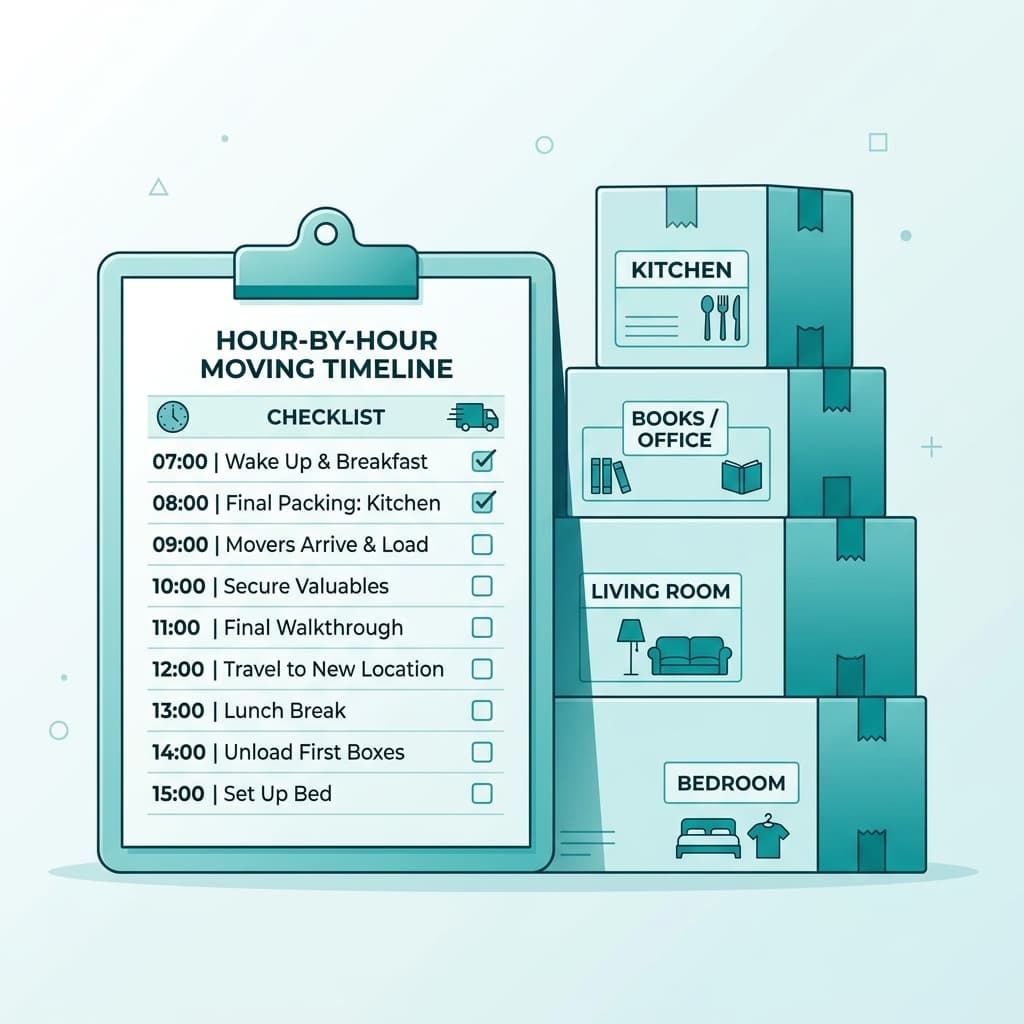
- Protect your relocation with our hour-by-hour moving day checklist. Learn how to verify moving truck details, USDOT records, and complete an accurate inventory list.
- Key topic: moving day safety
- Key topic: verified moving companies
- Key topic: avoid moving scams
When the moving truck arrives, the first thing you should check is the vehicle side markings, confirming the carrier's legal name and USDOT number match your paperwork. You must verify these details on the federal database and complete a detailed moving day inventory sheet checklist before loading begins.
Relocating your household is a complex transition that demands meticulous planning, and finding a trustworthy long distance moving company near me can feel overwhelming. With hundreds of local and interstate carriers vying for your business online, sorting through marketing claims requires a systematic approach. Amidst the chaos of packing boxes and finalizing utility transfers, pickup day stands out as the most critical window for consumer vulnerability. Unscrupulous operators exploit the urgency of the moment, relying on pressure tactics to slide extra charges past unsuspecting homeowners. To ensure a seamless transition and safeguard your hard-earned dollars, you must work only with verified moving companies that adhere to strict federal transportation guidelines. Establishing an hour-by-hour inspection protocol on pickup day is not just about staying organized; it is your ultimate line of defense. By understanding your rights, checking credentials, and systematically documenting your cargo, you can easily avoid moving scams and execute a stress-free relocation.
The very first hour of your move sets the tone for the entire process. When the crew pulls up to your curb, do not permit them to load a single item until you conduct a visual inspection of the vehicle and a rigorous credential verification. Legitimate interstate haulers are federally mandated to display their commercial name and USDOT registration number clearly on the vehicle exterior. If the truck is unmarked, rented, or displays credentials that do not match your estimate, halt the operation immediately. Take this opportunity to perform an FMCSA safety check by entering their USDOT or MC number directly into the official government database. This portal provides real-time registration status, safety history, and insurance records. By reviewing this information, you can confirm whether the company has a history of safety violations, customer complaints, or unauthorized broker operations. Crucially, verify that the carrier meets the mandatory federal cargo liability minimum, which includes a $750,000 baseline coverage for household goods transport. Any company operating below this insurance threshold is in direct violation of federal laws and poses an unacceptable risk to your family's belongings.
As the crew begins their walkthrough, transition your attention to the paperwork. The foreman will present the Bill of Lading, which serves as the official, legally binding contract governing your shipment. Never, under any circumstances, sign a blank or partially completed document. Ensure that the carrier's registered name, address, payment terms, and delivery window are filled out in detail. Review the agreed rates to confirm they align with the binding or non-binding estimate you received. This hour is also when you finalize your valuation choice. You will select between basic Released Value Protection, which covers goods at a meager sixty cents per pound, or Full Value Protection, which requires the carrier to replace or repair damaged items. Ensure your selection is explicitly recorded on the paperwork. During this stage, make sure the foreman prepares an official moving day inventory sheet checklist to log the physical condition of every item before it is moved.
During the third and fourth hours, the loading phase begins in earnest, requiring active supervision on your part. The foreman will label each piece of furniture and box with a numbered tag, logging the items on their ledger. You must walk alongside the crew as they assess and record the initial condition of your assets. If a mover tags your pristine hardwood table as heavily scratched to deflect liability, contest the description immediately and demand a correction on the moving day inventory sheet checklist. Once the inventory is complete, both parties must sign it, establishing a mutual record of the shipment's condition. Furthermore, monitor how the crew handles your boxes. Look for proper loading techniques, such as placing heavy boxes at the bottom and securing fragile boxes with cargo straps. It is helpful to research how directories audit moving services. You can read our detailed guide comparing [movers to trust vs standard directories](/blog/movers-to-trust-vs-standard-directories) to learn how professional validation protects consumers from fraudulent operators.
With the truck nearly full, the fifth hour should be dedicated to a thorough walkthrough of the property. Check every closet, cabinet, drawer, attic space, and crawlspace. Do not forget to inspect the garage, patio, and outdoor shed. Items left behind are incredibly difficult and expensive to recover once the truck departs. Walk around the exterior to ensure no property damage occurred during the loading process, such as gouged walls, scraped door frames, or broken banisters. Document any property damage with photos and have the foreman sign a written acknowledgment before they leave. If you notice fresh scratches on your walls or chipped paint on the staircase, write these details directly onto the mover's copy of the service order. Check the truck cargo area one final time to verify that all items are securely loaded, properly padded, and locked down for transit.
The final hour involves coordinating delivery logistics and executing security protocols. Confirm the driver's phone number, the dispatch office contact, and the exact delivery address. Review the payment schedule; reputable movers will not demand payment before delivery is completed. If a mover demands cash or a wire transfer before unloading, this is a major warning sign. Always pay with a credit card or cashier's check to ensure a paper trail and fraud protection. As the driver prepares to lock the truck, verify that you have received copies of all signed documents, including the Bill of Lading and the signed inventory list. Having a copy of the completed cargo inventory list is your primary legal protection should you need to file an insurance claim for damaged or missing goods. To ensure your selected mover meets these stringent guidelines and carries the required insurance baseline, check credentials on our website. Make sure to [Verify your mover today](https://moverstotrust.com) using our comprehensive validation tools.
Did you find this guide helpful?
Share it to help others verify credentials and avoid rogue mover scams.
Verified Sources & Citations
In alignment with Google's E-E-A-T and Search Quality guidelines, this article cites the following verified authority sources: