Key Takeaways
- Learn how moving quotes based on cubic feet expose consumers to severe bait-and-switch scams, and how to protect yourself by demanding weight-based estimates.
- Key topic: moving quotes based on cubic feet
- Key topic: avoid moving scams
- Key topic: interstate moving safety
Yes, your moving estimate must be based on weight rather than cubic feet. Federal law requires interstate household goods shipments to be priced by weight or binding flat rates. Volume estimates are highly subjective, easily manipulated by rogue operators, and expose consumers to devastating bait and switch hostage moving scams. This simple regulatory standard serves as the single most critical line of defense between a secure relocation experience and a financial nightmare. When you are looking for a reliable partner, you might search for a long distance moving company near me in hopes of finding a reputable service. However, without knowing these rules, you are highly vulnerable to predatory pricing.
Many consumers do not realize that the choice between volume and weight is not a matter of convenience; it is a legal boundary. Rogue operators frequently lure clients by offering cheap moving quotes based on cubic feet over the phone. These low estimates look highly competitive compared to legitimate bids, but they carry a dangerous catch. Once loaded, the mover can claim your shipment took up far more space than anticipated, resulting in an immediate price increase. This is why understanding how these rogue operators exploit volume is the first step to ensuring you only work with verified moving companies.
The Subjective Trap of Volume Quotes
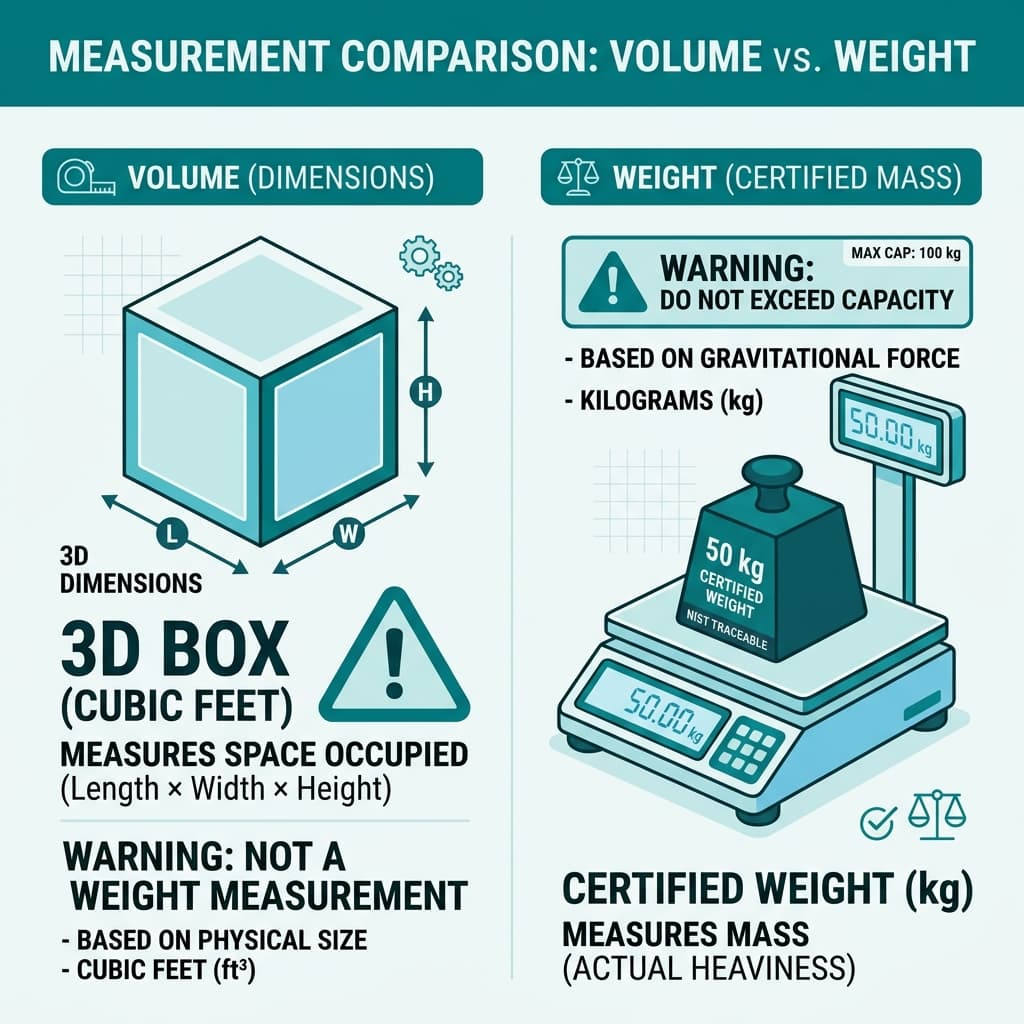
Cubic feet represents the physical space your furniture occupies inside a moving trailer. While charging for the space you consume might sound reasonable on paper, in reality, volume is a highly subjective metric. Unlike weight, which is measured by calibrated machines, cubic footage is determined entirely by human observation and packing styles. A crew can load a truck loosely, leaving large gaps of empty space to deliberately inflate the volume of your shipment. Because your goods are packed behind closed doors, verifying the true loaded volume is practically impossible for consumers.
This lack of verification is why rogue operators prefer volume based agreements. There is no official volume ticket or third party receipt equivalent to a certified commercial scale ticket. If a mover demands more money for extra space, you cannot prove them wrong. This lack of transparency is the direct vehicle for bait and switch extortion, where consumers are forced to pay massive surcharges under threat of having their belongings held hostage. To protect yourself, you must actively learn how to avoid moving scams that rely on this volume loophole.
The Federal Standard: Why Weight Rules
To establish fair play in the moving industry, federal regulations under Title 49 of the Code of Federal Regulations Part 375 mandate that interstate movers must bill customers based on actual weight or offer a binding flat rate. Under federal law, volume is explicitly prohibited as a standard billing unit for interstate moves unless a binding agreement specifies otherwise. Weight is a completely objective, scientifically verifiable metric that cannot be easily manipulated by loose packing efficiency or subjective visual estimates.
When a mover charges by weight, they must utilize certified commercial scales to calculate the true weight of your household goods. This process involves obtaining a tare weight, which is the weight of the empty truck, trailer, fuel, and equipment before loading, and a gross weight after loading. The difference between the gross and tare weight gives the net weight, which is the actual weight of your shipment. Both weighings must be documented on certified scale tickets issued by a licensed weighmaster. You have the legal right to accompany the carrier to the scale to witness both weighings.
The Movers To Trust Advocacy Standard: Verification Protocols
At Movers To Trust, we believe that true consumer safety requires active vetting of the moving company before you allow them to touch a single box. To ensure you do not receive fraudulent bids, you must run a comprehensive FMCSA safety check on any prospective carrier. Start by asking for the mover's unique USDOT and MC numbers. You must enter these credentials directly into the FMCSA's SAFER portal to check their operating status. A legitimate carrier must show active status for common carrier authority on the federal portal database. If they are listed as inactive, do not hire them.
Equally important is verifying the carrier's insurance coverage. Federal law requires interstate household goods carriers to maintain a baseline of $750,000 in public liability and cargo insurance to protect consumer goods in transit. Many rogue movers operate with minimal or lapsed cargo insurance policies, which means if your goods are damaged, you will have no recourse. Make sure you view their insurance status on the FMCSA portal and verify that they meet this $750,000 baseline. This check establishes that the company is fully registered and financially accountable for your shipment.
Red Flags of Cubic Feet Scams
How can you spot a rogue mover who uses volume based pricing to exploit consumers? First, they will almost always refuse to conduct a walkthrough. Instead, they will provide a quote based on a brief phone call. Second, their paperwork will refer to volume in the fine print. Under FMCSA regulations, if a carrier provides moving quotes based on cubic feet for an interstate move, it violates federal consumer protection rules. If you see this, cancel the agreement immediately and look for a carrier that uses certified truck weights.
Planning Your Relocation Safely
Planning a successful move requires you to understand the true costs involved. Before making your final decision, we highly recommend reading our detailed guide on the [average long distance moving cost 2026](/blog/average-long-distance-moving-cost-2026) to establish a realistic moving budget. This essential resource will help you compare different quotes based on certified weight rather than arbitrary volume, protecting your family and possessions from unexpected financial surprises at delivery day.
Do not let rogue operators hold your valuable household goods hostage. Take complete control of your relocation by using a platform dedicated to your protection. [Verify your mover today](https://moverstotrust.com) to ensure they have active USDOT authority, clean safety records, proper licensing, and the federal cargo liability insurance baseline of seven hundred fifty thousand dollars to safeguard you.
Did you find this guide helpful?
Share it to help others verify credentials and avoid rogue mover scams.
Verified Sources & Citations
In alignment with Google's E-E-A-T and Search Quality guidelines, this article cites the following verified authority sources: