Key Takeaways
- As May rolls in, Texas enters its busy season. Learn about the most common moving scams plaguing Texas right now, and exactly how you can protect yourself.
- Key topic: moving scams texas
- Key topic: fmcsa search
- Key topic: usdot license
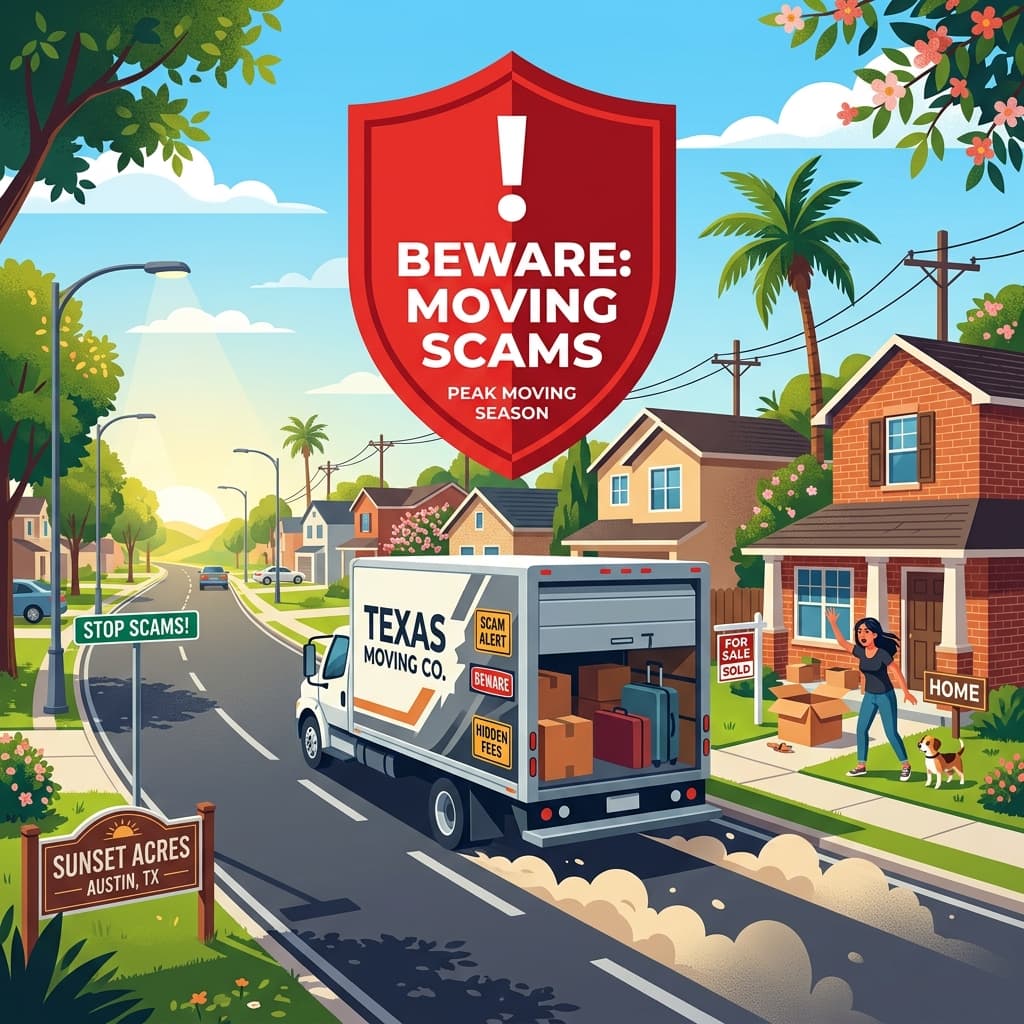
As May rolls in, Texas enters its busy season. Students are graduating and moving back home or to new cities, new job placements are starting, and families are taking advantage of the summer break to plan major life transitions. However, this period of high mobility—running from May through August—also marks the unofficial start of something far more sinister: peak moving scam season.
With the housing and rental markets bustling across the Lone Star State, scammers know that consumers are often stressed, rushed, and vulnerable. Local authorities and consumer protection agencies are sounding the alarm, urging Texans to remain vigilant as fraudulent moving operations seek to exploit the chaos of relocating.
Here is an expanded look at the most common moving scams plaguing Texas right now, and exactly how you can protect yourself before handing over the keys to your life's possessions.
🚩 The Most Common Moving Scams to Watch For
Scammers have become increasingly sophisticated, utilizing the internet to mask their illicit operations. Here are the top tactics being reported:
1. The "No-Show" Deposit
In this scenario, a moving company provides an incredibly competitive quote—often much lower than the market average—and demands a large, upfront deposit to "secure your moving date." Once the deposit is paid (frequently via wire transfer, cash app, or crypto), the company completely vanishes. On moving day, no truck arrives, and the company's phone numbers are disconnected.
2. "Hostage" Goods
This is perhaps the most devastating scam. The movers show up, load all of your furniture and belongings onto their truck, and then suddenly stop. They inform you that the initial quote was "just an estimate" and that your items are heavier or require more space than anticipated. They demand double or triple the original price—often in cash—and refuse to deliver or release your belongings until the exorbitant ransom is paid.
3. The Surprise Fee Trap
Similar to the hostage situation but slightly less aggressive, these movers will deliver your goods but refuse to unload them until you pay a slew of "unexpected fees." These might be framed as "long-carry fees," "stair fees," or "bulky item surcharges" that were never mentioned in the original contract.
4. Phantom Movers (Fake Online Presence)
With a few clicks, scammers can easily create professional-looking websites featuring fake, glowing reviews and stolen photos of branded moving trucks. These "companies" often don't own any trucks at all. They act as illegal, unlicensed brokers, taking your deposit and then auctioning off your move to the lowest bidder—who may also be unlicensed or uninsured.
🛡️ Your Defensive Playbook: How to Protect Yourself
While the threat is real, consumers have powerful tools at their disposal to weed out bad actors. By taking the following precautions, you can ensure your move goes smoothly:
Verify Licensing and Registration
In Texas, all moving companies must be licensed by the Texas Department of Motor Vehicles (TxDMV). If a company is moving you from one Texas city to another, they are legally required to have an active TxDMV certificate. * The Check: Use the free [TxDMV "Truck Stop" Database](https://apps.txdmv.gov/apps/mccs/truckstop/) to verify a company’s active registration, insurance status, and complaint history. * Interstate Moves: If you are moving across state lines, the company must be registered with the Federal Motor Carrier Safety Administration (FMCSA) and have a valid U.S. DOT number.
Demand an On-Site or Virtual Video Estimate
Never trust a mover who guarantees a firm price over the phone or via email without ever seeing what you own. Legitimate movers will insist on an in-person walkthrough (or a detailed live video call) to accurately assess the volume, weight, and logistical challenges of your move.
Refuse Large Upfront Deposits
Reputable moving companies rarely require a large deposit before the move, and they will never demand payment exclusively in cash, wire transfer, or peer-to-peer payment apps (like Zelle or Venmo). Usually, you pay the bulk of the cost *after* the move is completed.
Read (and Understand) Every Document
Never sign a blank or incomplete contract. Your "Bill of Lading" is your official contract; it must clearly outline the pickup and delivery dates, the cost breakdown, the inventory of your items, and the agreed-upon payment terms. Keep a physical and digital copy of this document with you on moving day.
Research Beyond the Homepage
Don't rely solely on the testimonials posted on a mover's own website. Check independent, third-party platforms like the Better Business Bureau (BBB), Google Reviews, and Yelp. Be suspicious of companies with no reviews, or a sudden influx of perfect 5-star reviews posted within a few days of each other.
🚨 How to Report Moving Fraud
If you suspect you are dealing with a scammer, or if you have already been victimized, do not stay silent. Reporting the incident helps authorities track down the perpetrators and protects other consumers.
- For In-State Texas Moves: File a formal complaint using the [TxDMV’s Complaint Entry System](https://apps.txdmv.gov/apps/mccs/truckstop/) or call their Consumer Helpline at 1-888-368-4689.
- For State-to-State Moves: File a complaint with the Federal Motor Carrier Safety Administration (FMCSA) at their [National Consumer Complaint Database](https://nccdb.fmcsa.dot.gov/) or call 1-888-368-7238.
- Contact the BBB: Report the business to your local Better Business Bureau to flag the company for other consumers.
- Local Law Enforcement: If your belongings are currently being held hostage, or if you have been extorted, contact local law enforcement immediately to file a police report for theft.
Moving to a new home should be a time of optimism, not a nightmare. By staying alert, doing your homework, and trusting your instincts, you can safely navigate the Texas peak moving season.
Related Consumer Protection Resources & Tools
To ensure your relocation is secure and fully compliant with federal and state regulations, explore our consumer advocacy resources:
- Verify Operating Authority: Audit carrier credentials with our [Scam Risk Checker](/scam-checker).
- Explore Service Standards: Learn more about our vetted [Interstate Long-Distance Moving Services](/services/long-distance).
- Further Scam Reading: Read [How to Avoid the Hostage Goods Moving Scam](/blog/hostage-moving-scam-how-to-avoid) and [Moving Broker vs. Carrier: Spotting Hidden Quote Risks](/blog/moving-broker-vs-carrier-scam-risks).
- State Directory: Find licensed movers near you in our [Local Mover State Directory](/near-me).
Did you find this guide helpful?
Share it to help others verify credentials and avoid rogue mover scams.
Verified Sources & Citations
In alignment with Google's E-E-A-T and Search Quality guidelines, this article cites the following verified authority sources: