Key Takeaways
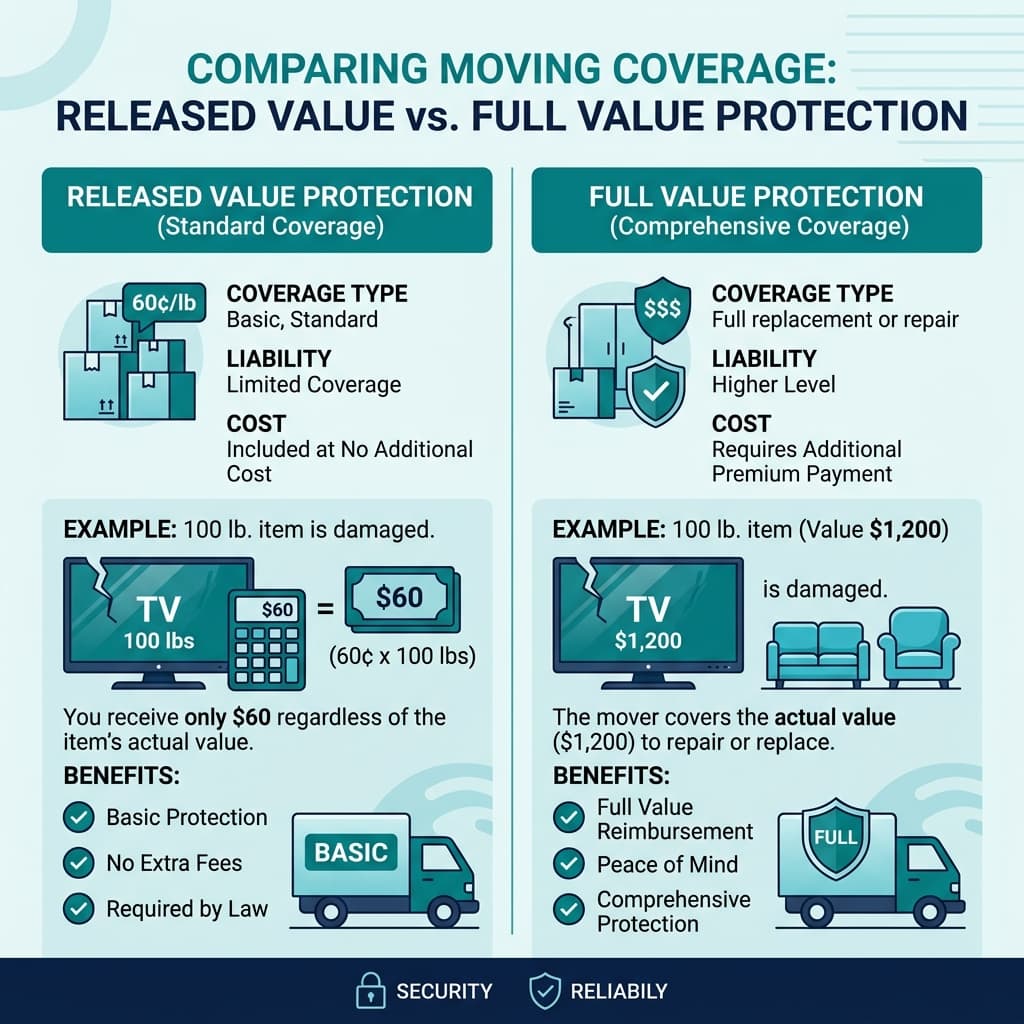
Moving companies do not provide standard insurance; instead, they offer valuation coverage. The default option is Released Value Protection, which covers only 60 cents per pound per article at no extra cost. For full coverage, you must select Full Value Protection or buy separate third-party moving insurance policies.
Preparing for an interstate relocation can be an overwhelming experience, filled with logistical decisions and administrative details. As you begin searching for a licensed long distance moving company near me, you will likely be bombarded with quotes, contracts, estimates, and complex legal agreements. Among the most critical choices you will face is deciding how to protect your household goods from potential damage or loss during transit. Unfortunately, a vast majority of consumers make the dangerous assumption that their moving company automatically insures their possessions against all risks. This common misunderstanding often leads to devastating financial losses if items are broken or misplaced on the road. To safeguard your assets, you must understand the distinction between carrier-provided valuation and third-party moving insurance.
Under federal regulations established by the Federal Motor Carrier Safety Administration (FMCSA), interstate movers must offer consumers two distinct options. Selecting released value vs full value protection moving packages is a key regulatory choice that dictates the level of financial liability a moving carrier assumes. It is vital to note that valuation is not traditional insurance; rather, it is a contractual level of liability governed by federal tariff laws. This means that instead of filing an insurance claim with a state-regulated provider, you are filing a liability claim directly with the moving company based on the specific terms of your shipping contract.
The first tier of liability is Released Value Protection. This basic coverage is provided by carriers at no additional charge, but the protection it offers is minimal. Under this plan, the mover’s liability is strictly capped at just 60 cents per pound per article. For example, if a fifty-pound flat-screen television worth two thousand dollars is completely destroyed, the mover is only legally obligated to pay you thirty dollars. Similarly, if a three-pound vintage laptop worth fifteen hundred dollars is lost, the carrier's liability is a meager one dollar and eighty cents. For modern households filled with lightweight, high-value electronics and appliances, this default protection is woefully inadequate and leaves you exposed.
Relying on this minimal default option is one of the most common mistakes shippers make during relocations. Furthermore, dishonest moving companies and brokers frequently exploit this system to avoid financial responsibility for their negligence. To avoid moving scams, you must be highly vigilant when reviewing your moving documents. Shady operators often pre-select the basic coverage box on your behalf or rush you through signing the Bill of Lading without explaining the financial consequences of your choice. If you sign this agreement without understanding the terms, you waive your right to full reimbursement if your items are damaged.
To protect yourself and your possessions from rogue operators, you must perform a thorough vetting process before hiring a carrier. Every legitimate mover operating across state lines must hold active registration with the Department of Transportation. You should always perform a comprehensive FMCSA safety check using the carrier’s USDOT or Motor Carrier (MC) number on the federal portal. This safety database contains public records of a carrier's inspections, violations, safety history, and insurance status.
In addition to verifying active registration, you must check that the carrier maintains the required liability insurance. Under federal regulations, household goods carriers are required to meet a strict cargo liability baseline, including maintaining a minimum of $750,000 in active cargo insurance. This standard ensures that the company possesses the financial resources to compensate customers in the event of catastrophic losses, such as a vehicle collision or warehouse fire. If a mover cannot show active registration or fails to meet the federal cargo insurance minimums, they are operating illegally. To learn more about navigating these databases, read our detailed guide on [how to read FMCSA reports and verify USDOT credentials](/blog/how-to-read-fmcsa-report-verify-usdot). Before signing any contract, you can also [Check mover credentials here](https://moverstotrust.com) to verify their license status.
If the basic valuation is insufficient, federal law requires movers to offer Full Value Protection (FVP) as the comprehensive option. Under FVP, the moving carrier assumes liability for the full replacement value of lost or damaged items in your shipment. If an article is damaged or lost, the mover must either repair the item to its original condition, replace it with a like-kind item, or offer a cash settlement for the current replacement cost. Unlike basic coverage, FVP requires you to pay a premium based on the total declared value of your shipment. It is also important to note that FVP does not cover "articles of extraordinary value"—items worth more than one hundred dollars per pound, such as jewelry, fine art, or designer clothes—unless you explicitly list them on your inventory sheets beforehand.
For shippers seeking ultimate security, third-party moving insurance represents the highest level of coverage. Because moving companies are transportation carriers and not licensed insurance brokers, they cannot legally sell insurance policies directly to consumers. Instead, they can only offer valuation coverage. If you want true insurance, you must purchase a policy from an independent insurance provider. This external coverage is invaluable because it covers events that valuation excludes, such as natural disasters, severe weather, or accidents where the carrier is not legally liable. When you hire verified moving companies, their moving coordinators will explain how a third-party policy works in tandem with the carrier's baseline liability, ensuring your belongings are protected against every potential risk.
Ultimately, choosing between released value vs full value protection moving levels depends on the total value of your shipment and your tolerance for financial risk. While the basic option is free, it is rarely sufficient for a complete household move. Investing in Full Value Protection or purchasing third-party moving insurance guarantees that your assets are covered and provides peace of mind throughout your relocation. By verifying your mover's DOT credentials, checking their cargo insurance coverage, and understanding the fine print in your agreement, you can ensure a safe and successful move.
Did you find this guide helpful?
Share it to help others verify credentials and avoid rogue mover scams.
Verified Sources & Citations
In alignment with Google's E-E-A-T and Search Quality guidelines, this article cites the following verified authority sources: