Key Takeaways
- An in-depth comparison of portable storage containers and traditional moving companies, focusing on physical safety, security, and consumer protection.
- Key topic: pods vs full service movers cost
- Key topic: long distance moving services
- Key topic: long distance moving cost
It is generally cheaper to use PODS than to hire a full service moving company, saving hundreds or thousands of dollars. However, while storage containers offer a lower pods vs full service movers cost, traditional carriers provide physical packing, loading, transport, and comprehensive regulatory cargo liability protection for your valuable household goods.
Planning a successful relocation requires a careful balance between your budget constraints and the safety of your family's lifelong possessions. If you are preparing to move across state lines, you are likely comparing different transit methods to find the most efficient solution. While looking for a reliable long distance moving company near me can lead you to traditional full-service options, self-service moving containers like PODS offer a popular alternative. The decision is not merely about finding the lowest price tag; it requires analyzing how each service operates, the physical risks to your cargo, and the federal consumer protections designed to keep you safe from predatory schemes.
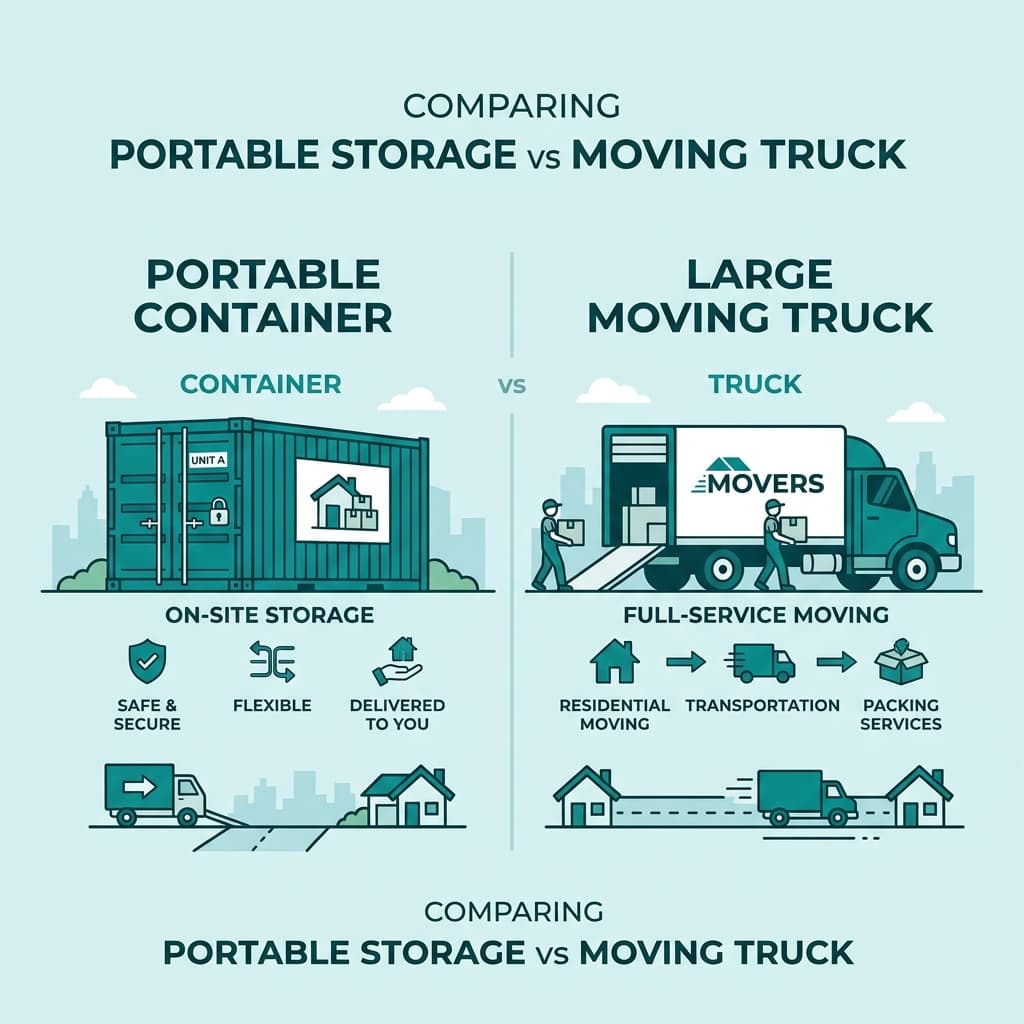
Portable storage container services operate under a simple model: a company delivers a weather-resistant container to your driveway, you load it at your own pace, and the company transports the container to your new residence or a storage facility. This model offers unique benefits, particularly in terms of chain of custody. When you use a container, you purchase and control the lock and key, ensuring no third parties touch your goods during transit. This eliminates the risk of co-mingling, which is common with consolidated freight carriers where multiple families' belongings are loaded onto the same trailer. If your new home is not ready, the container can be stored in a secure climate-controlled warehouse, avoiding the extra risk of unloading and reloading. This storage option is perfect for staggered closing dates or delayed construction timelines.
However, the physical safety of your belongings in a container depends entirely on your personal packing skills. Interstate shipping exposes cargo to severe vibrations, sharp turns, and sudden braking forces. Professional movers understand how to distribute weight and secure items to prevent them from shifting. DIY packing often leads to significant transit damage, especially for fragile or valuable items. If you must transport heavy or delicate pieces, it is helpful to learn [how to safely move a piano or high-value items](/blog/how-to-move-piano-high-value-items) to prevent catastrophic breaks. If items shift and break inside a container, you have almost no financial recourse. Because container companies only transport the unit, their liability is restricted to damage caused by their own equipment failures or traffic accidents. They do not cover damage resulting from improper loading or internal cargo shifting.
Traditional full service moving companies offer a complete, hands-off relocation. A professional crew manages the packing, loading, driving, and unloading of your household goods. These registered motor carriers use specialized equipment, high-quality moving blankets, and custom crating to secure your possessions. They also utilize heavy-duty commercial trucks, often equipped with air-ride suspension, which absorbs road shocks much better than the steel-spring suspension systems used on portable container chassis. By employing experienced professionals, you reduce the physical strain of moving and minimize the risk of accidental damage to your items. This comprehensive package means you do not have to lift a finger or worry about navigating a large truck through tight streets, making it the preferred option for busy or physically limited individuals.
The regulatory framework governing interstate relocations provides another layer of security for consumers. Traditional full-service movers operating across state lines must comply with strict Department of Transportation (DOT) and Federal Motor Carrier Safety Administration (FMCSA) rules. At Movers To Trust, our strict advocacy standards require that you perform an FMCSA safety check before booking any carrier. Every legitimate carrier must maintain active USDOT and MC (Motor Carrier) numbers, which are searchable on the federal SAFER database. Furthermore, household goods carriers are required to carry public liability and cargo insurance. To protect your estate, you must verify that your chosen carrier meets the federal cargo liability minimum, which should start at a $750,000 baseline for public liability and cargo security. This insurance baseline ensures the company has the financial backing to cover catastrophic losses, a protection that is completely absent when hiring unlicensed entities or relying on basic container liability policies.
Despite these regulations, the moving industry is frequently targeted by rogue operators and unlicensed brokers. These fraudulent entities often use polished websites to pose as legitimate companies, only to sub-contract the job to low-quality haulers. To protect your family, you must learn how to identify and avoid moving scams that can result in your belongings being held hostage for thousands of dollars in unexpected fees. Legitimate verified moving companies will never offer binding estimates over the phone without conducting a physical or virtual walkthrough of your home. They will also provide you with the federally mandated 'Your Rights and Responsibilities When You Move' booklet, ensuring you understand your rights under Title 49 of the Code of Federal Regulations.
When making your final decision, comparing the actual pods vs full service movers cost involves analyzing both direct and indirect expenses. While containers might save you money upfront, you must factor in the cost of packing supplies, renting moving pads, loading labor, and potential HOA parking fines. Conversely, a full-service mover charges a higher price but covers all labor, transport, and standard valuation. If you hire a professional carrier, you can [Verify your mover today](https://moverstotrust.com) to guarantee you are working with an authorized, insured company that protects your cargo. Choosing the right relocation path depends on your budget, physical capability, and tolerance for logistical risk.
Ultimately, whether you select a flexible moving container or a traditional full-service carrier, safety should remain your absolute priority. Safe relocations are built on thorough background checks, reliable cargo protection plans, and realistic budgeting. By understanding the mechanical differences in transit systems and checking every carrier's credentials, you can protect your household goods and ensure a seamless transition. Never sign a contract without verifying active authority, and always trust verified safety data to guide your long distance moving journey.
Did you find this guide helpful?
Share it to help others verify credentials and avoid rogue mover scams.
Verified Sources & Citations
In alignment with Google's E-E-A-T and Search Quality guidelines, this article cites the following verified authority sources: